Learning model
Good ideas begin with better questions.
Invention Education (IvE) is an innovative approach to learning that equips students with hands-on problem-solving skills, encouraging them to become empathetic inventors.

The approach
Learning through real problems.
Unlike traditional passive learning methods, this model actively engages students in identifying real-world challenges, especially those without straightforward solutions, and developing their own creative solutions. Through designing, prototyping and critical thinking, students cultivate a mindset of exploration and resilience.

In Kenya, Invention Education is being integrated into the national innovation ecosystem to strengthen pathways for young innovators. Universities play a crucial role in this transformation by fostering talent and facilitating idea generation to address local and global challenges. Kenyatta University’s first graduate IvE programme is the M.Sc. in Biomedical Engineering – Medical Device Innovation (MDI).
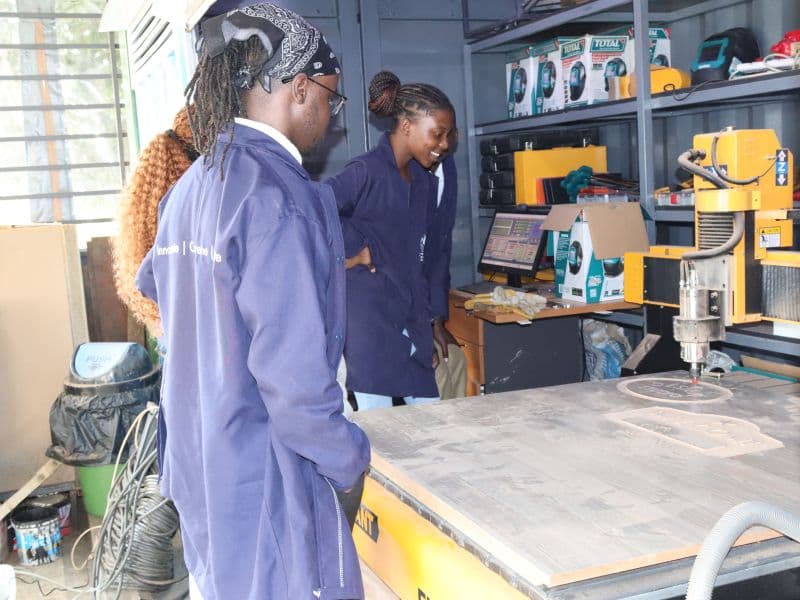
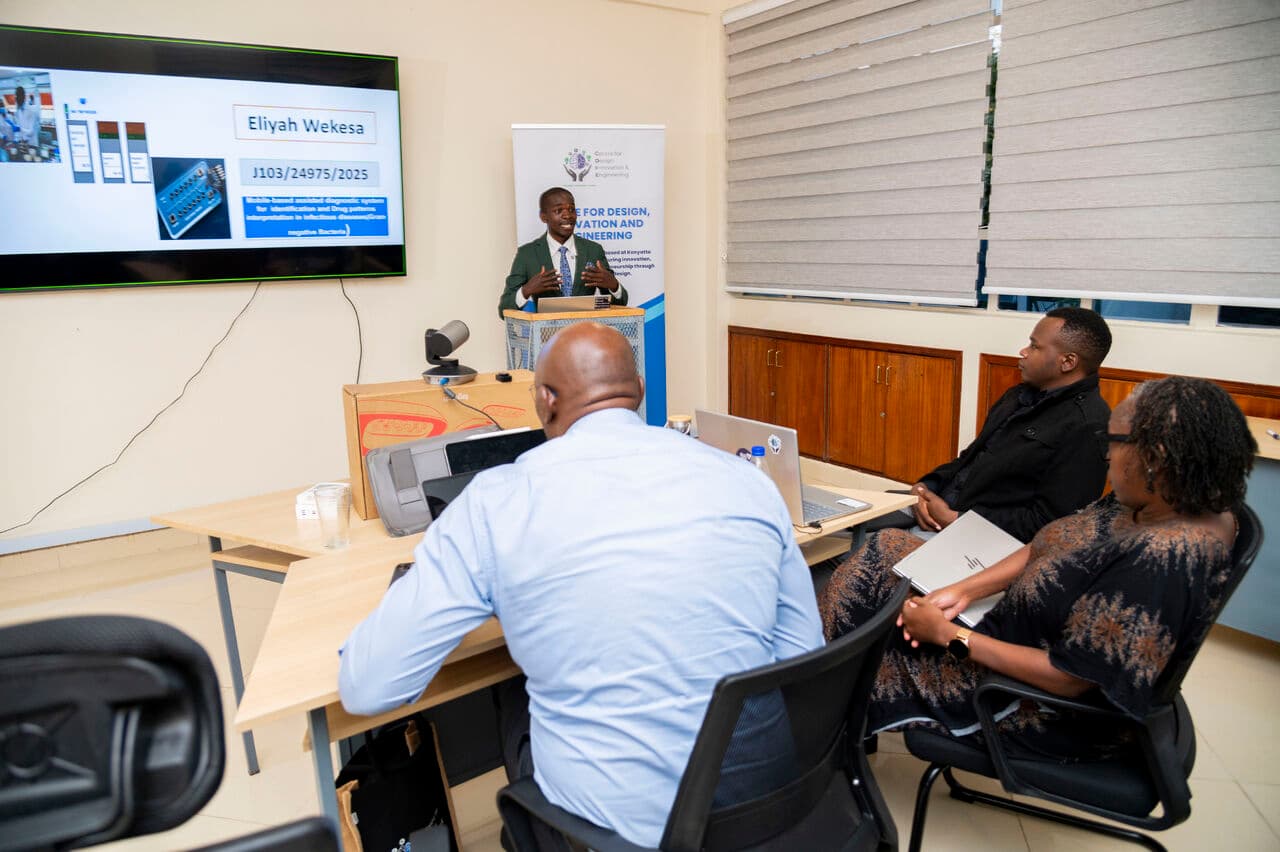
In the MDI programme, students are presented with opportunities that simulate professional practice, from team-based design projects to mock interviews to working alongside medical health professionals. Students take classes in early-stage device innovation and develop professional networks through interaction with industry, learning the standards of medical device development.
The learning model
Four stages, in order.
- 1
Understand the need.
Explore the experiences of users and the setting in which a solution must work.
- 2
Develop a direction.
Compare ideas, discuss trade-offs and decide what is worth testing.
- 3
Build and learn.
Make prototypes, gather feedback and use what you discover to improve the design.
- 4
Explain your thinking.
Share the need, the evidence and the choices behind your work.
Take-aways
What you leave with.
A more deliberate approach to problem-solving, practical experience of prototyping and the confidence to work across disciplines.